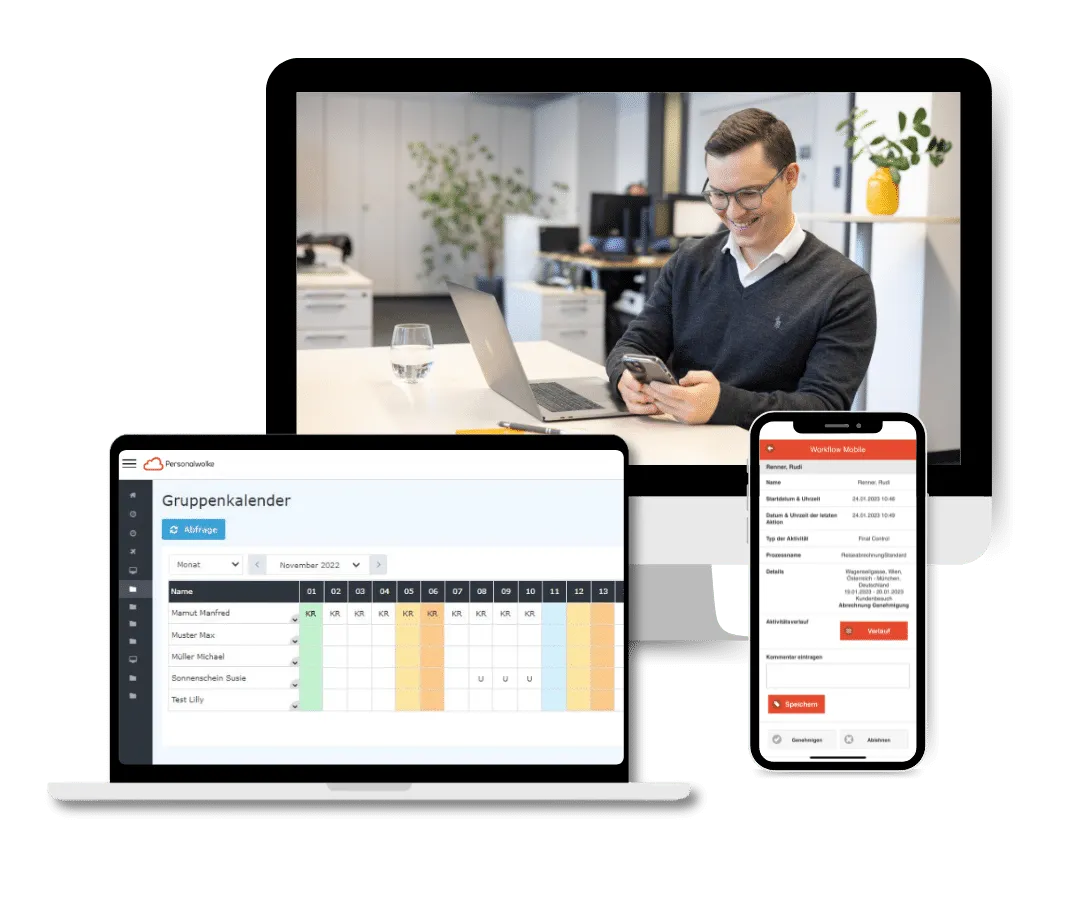
What is absence management?
Absence management comprises the systematic recording, administration and evaluation of all employee absences. This includes vacation, sick leave, compensatory time off, special leave, care leave and statutory and company leave.
The aim of absence management is to ensure transparency, predictability and legal certainty for employees, managers and HR departments.
In Austria in particular, structured absence management is essential, as different legal regulations, collective agreements and company agreements have to be taken into account.
What types of absences are there?
Various absence types are distinguished in absence management, including
Legally regulated absences
→ Vacation, sick leave, care leave, maternity leave, parental leave
Operational absences
→ Time off in lieu, further training, absence from work, special leave
Short-term absences
→ Medical appointments, visits to the authorities or family emergencies (depending on the arrangement)
A clear definition of absence types is crucial in order to avoid misinterpretations, unequal treatment or conflicts.
How does professional absence management work?
Efficient absence management is based on clear processes and transparent documentation:
- Recording absences via digital systems or HR software
- Clear approval processes between employees and managers
- Automatic consideration of statutory entitlements and quotas
- Interfaces to time management and payroll accounting
Digital absence management reduces errors, saves time and creates a reliable database for HR decisions.
What role does absence management play for HR & managers?
Absence management is a key management tool for HR departments:
- Ensuring compliance with legal and collective agreement requirements
- Avoidance of under- or overclaims
- Basis for personnel planning, substitution models and capacity management
For managers, it makes it easier to plan teams, projects and resources - especially in the event of seasonal peaks or high sickness rates.
What should companies and employees look out for?
For employees:
→ Apply for absences in good time and document them correctly
→ Check your own vacation and time accounts regularly
For companies & HR:
→ Uniform rules and clear communication
→ Transparent approval processes
→ Use of digital tools to reduce administrative workload
Why is absence management so important?
For employees:
→ Transparency, fair treatment and a clear overview of your own claims
For companies:
→ Planning security, legal protection and efficient use of resources
Well-structured absence management strengthens trust, reduces conflicts and is an essential part of modern HR work.