Time tracking for craft businesses—the advantages!
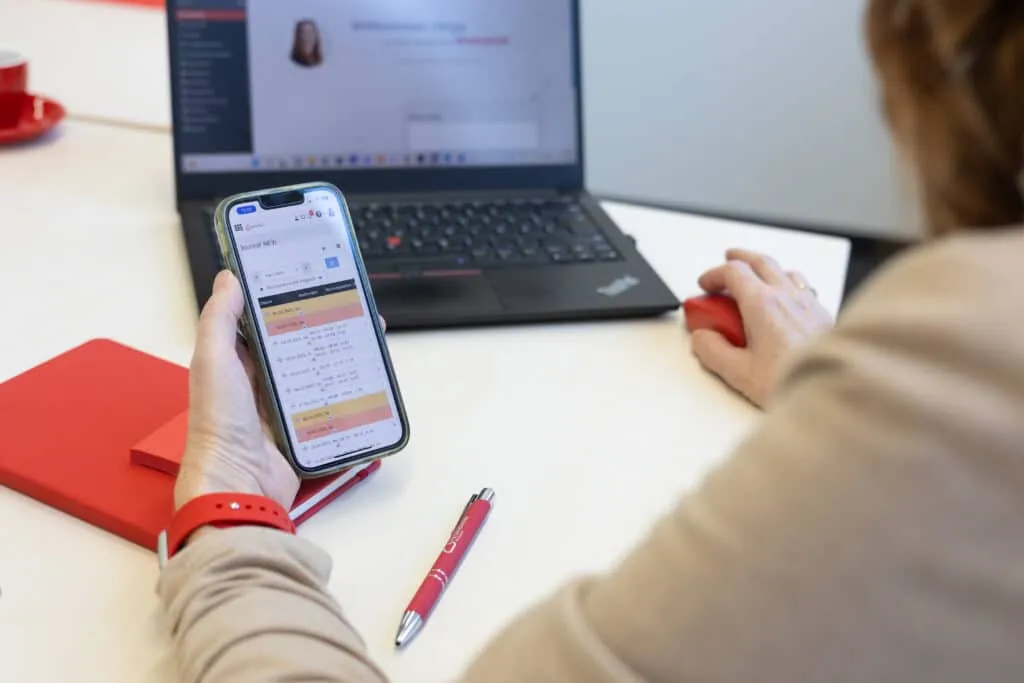
Digital time tracking for craft businesses enables precise, transparent, and legally compliant recording of working and project hours—regardless of where employees are deployed. Modern mobile time tracking solutions for tradespeople replace error-prone paper timesheets and provide a reliable foundation for planning, billing, and project costing. As a result, craft businesses increase efficiency while fully meeting all legal requirements.
Why Digital Time Tracking Is Becoming Essential for Craft Businesses
Craft businesses often operate with changing teams across multiple construction sites. This creates a strong need for accurate, complete, and timely documentation of all working hours. In addition, the 2019 ECJ ruling and national regulations require companies in the EU to record working hours in an objective, reliable, and tamper-proof manner.
Digital systems meet these requirements far better than analog methods—especially because they can be used both mobile and stationary, with data available in real time. This gives companies a reliable basis for payroll, planning, and post-calculation, regardless of where employees are working.
Challenges of Traditional Timesheets in Craft Businesses
Paper-based timesheets or simple Excel templates are still widespread, but they come with significant drawbacks. Craft businesses feel these challenges particularly strongly because employees are rarely in the office.
Typical Problems with Traditional Time Tracking
| Problem | Impact |
|---|---|
| Illegible or forgotten entries | Inaccurate billing, time loss |
| Entries added later instead of in real time | High error risk, discrepancies in project costs |
| No legal traceability | Risk during audits or disputes |
| High manual administrative effort | Time loss in the office, duplicate data entry |
| No transparency for employees | Follow-up questions and uncertainty |
For these reasons, more and more companies are turning to digital solutions that work automatically, location-independently, and with far greater accuracy.
Digital Time Tracking in Craft Businesses: Efficient, Objective, and Mobile
Digital time tracking for craft businesses allows working hours to be recorded directly at the job site. Whether via smartphone, tablet, or stationary terminal, data is stored centrally, evaluated automatically, and immediately available for HR, project management, or payroll.
Companies benefit from:
- Objective and legally compliant documentation, regardless of place of work
- Automated calculation of breaks, surcharges, and overtime
- Real-time overviews of work progress and time balances
- Reduced administrative workload, as no manual corrections are required
This improves not only data quality but also planning and cost reliability.
Mobile Time Tracking via App: Flexible, Precise, and Practical
Mobile time tracking is particularly important in craft businesses because employees rarely come into the office and therefore cannot record their working hours centrally. A time tracking app enables real-time recording directly at the job site.
How Mobile Time Tracking for Craftspeople Works
- Employees open the app on their smartphone
- They select the construction site, project, or customer order
- Working time starts with “Start” and ends with “Stop”
- Breaks, travel time, or errands can optionally be recorded
- Data is synchronized as soon as an internet connection is available
Advantages
| Advantage | Description |
|---|---|
| Precision | Working hours recorded to the minute |
| Location independence | Ideal for changing construction sites |
| Transparency | Employees can view their hours at any time |
| Efficiency | No retroactive entries at the end of the day or week |
| Tamper protection | Manipulation is largely prevented |
The app fully replaces traditional timesheets and ensures greater accuracy and transparency.
Tamper-Proof and Legally Secure: Why Digital Systems Are Superior
A key reason for adopting digital time tracking software is legal certainty. Paper-based lists are easy to manipulate, can be lost, or modified retrospectively. Digital systems, by contrast, store every entry with a timestamp, enabling audit-proof traceability.
Modern time tracking apps can also include additional security mechanisms such as NFC, geofencing, or biometric methods. These prevent unauthorized time entries—for example, when colleagues clock in for others. Such features increase legal security and build trust within the team, as everyone operates under the same rules.
Project and Job Time Tracking: The Basis for Sound Business Decisions
For many craft businesses, it is crucial to know how much time a job actually required. Digital project time tracking helps companies transparently assess real effort—especially important during quotation preparation or when planned and actual values differ.
With structured project time tracking, businesses can identify overloads or idle time early. It also enables precise calculations of project profitability. Since data is stored centrally, it is always available for internal analysis, post-calculations, or discussions with clients.
HR Software App: Greater Efficiency Across the Entire HR Process
Modern time tracking systems often include additional HR functions that significantly reduce administrative effort. These include digital personnel files, automated absence approval workflows, and employee self-service features. Such functions increase transparency and ensure that important information is available at all times.
By combining time tracking with digital personnel management, companies create an end-to-end digital process that improves collaboration between employees, project managers, and administration. Reducing manual processes also lowers error rates and processing times—positively impacting both employee satisfaction and internal operations.
Payroll Interfaces: Timely and Error-Free Billing
A major advantage of digital systems is the ability to transfer data directly to payroll. This eliminates the tedious and time-consuming manual entry of timesheets. Instead, all working hours, surcharges, and absences are transferred automatically, accelerating the entire payroll process.
In craft businesses with many field employees, this automation provides significant relief. Data transfer errors are minimized, follow-up questions reduced, and payroll processing becomes far more efficient—leading to smoother month-end closing and more capacity for other tasks.
Data Protection & Security: EU Standards as a Quality Feature
Because working time data constitutes sensitive personal information, data protection plays a central role. Digital time tracking solutions operated in certified EU data centers ensure secure storage and processing. Encryption technologies and clear role and authorization concepts guarantee that only authorized individuals can access specific data.
For craft businesses, this means relying on the highest security standards while fully complying with GDPR requirements. This builds trust among employees and ensures long-term, secure data storage.
Why Modern Craft Businesses Rely on Digital Time Tracking Today
Digital time tracking offers craft businesses numerous advantages that go far beyond recording clock-in and clock-out times. It increases transparency, reduces sources of error, and simplifies both project control and billing—while helping companies meet legal requirements and make sound business decisions.
As craft businesses increasingly operate in a mobile and flexible manner, a reliable digital solution is no longer optional—it is a core component of modern business management. Companies that adopt digital time tracking software today create a solid foundation for greater efficiency and long-term success.
FAQ – Frequently Asked Questions About Time Tracking in Craft Businesses
1. How does mobile time tracking work in craft businesses?
Working hours are recorded directly at the job site via smartphone, tablet, or terminal and synchronized automatically.
2. Does every craft worker need an app?
No. Employees can also clock in via stationary terminals or a web browser.
3. Is digital time tracking legally required in craft businesses?
Following the 2019 ECJ ruling, working hours must be documented objectively and reliably—digital solutions fulfill these requirements particularly well.
4. Can project times also be recorded digitally?
Yes. Modern systems allow tracking by project, task, or activity.
5. Is digital time tracking GDPR-compliant?
Yes, provided data is encrypted during transmission and stored in EU data centers.
6. Can vacation and absence times also be managed digitally?
Many systems include integrated self-service features for vacation, sick leave, and other absences.
7. How secure are biometric solutions such as fingerprint scans?
Modern systems do not store fingerprint images, only encrypted hash codes—fully GDPR-compliant.
8. Does digital time tracking really save time?
Yes, both in administration and in the follow-up processing of working hours and payroll.
9. Can time tracking be connected to payroll systems?
Many systems offer interfaces to common payroll and ERP solutions.
10. Is digital time tracking suitable for small craft businesses as well?
Yes. Smaller companies also benefit from reduced effort and clearer overviews.

